Clip hangers are widely used for pants, skirts, shorts, kidswear, garment sets and retail display programs. Compared with regular top hangers, clip hangers have more functional parts, so wholesale buyers need to check more than just the hanger shape and price.
In bulk orders, the most important point is clip tension. The clips should hold garments firmly without leaving deep marks or damaging the fabric. For lightweight skirts, very strong clips may be unnecessary. For denim pants or heavier garments, weak clips can cause slipping during display or transport.
The hanger width should match the garment type. Pants, skirts, kidswear and swimwear may require different bar lengths. If the hanger is too narrow, the garment may look crowded. If it is too wide, the product may not hang naturally on retail racks.
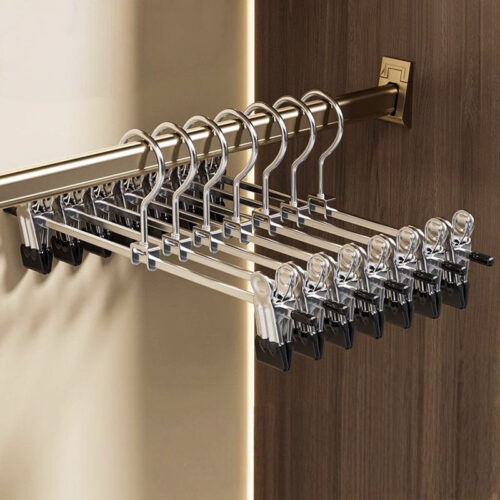
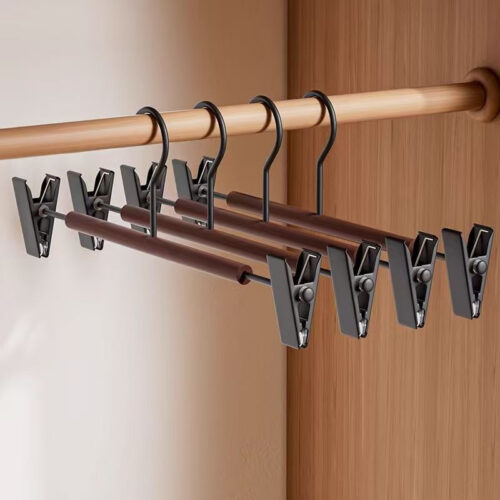
Material selection also affects cost and performance. Plastic clip hangers are common for retail stores, garment factories and volume wholesale supply. Wooden clip hangers are often used for premium apparel, boutiques and hotel wardrobes. Metal clip hangers can be suitable for slim storage, laundry supply or durable display needs.
Clip structure should be checked carefully before production. Buyers should look at clip opening size, spring strength, clip teeth design, sliding function and balance on the hanger bar. If the clip is difficult to open or moves too loosely, it may cause problems in daily store use.
Surface finish is another key point. Plastic clip hangers should be free from sharp edges, burrs and obvious injection marks. Wooden clip hangers should be smooth and evenly coated. Metal clip hangers should have stable plating or coating to avoid rust, scratches or sharp contact points.
For branded orders, logo position needs to be confirmed on the actual sample. Some buyers prefer logo printing on the hanger body, while others use labels, hot stamping or laser engraving depending on material. The logo should be visible but not interfere with the clip function.
Packaging should also be discussed early. Clip hangers have moving parts, so they may need better packing than simple plastic top hangers. Bulk carton packing, polybags, inner cartons, barcode stickers, paper sleeves, retail boxes and custom carton marks can be arranged based on wholesale or retail requirements.
Quality control should include more than appearance checking. For clip hanger orders, buyers should confirm size, clip tension, spring strength, hanger balance, hook strength, surface finish, logo position, packing quantity and carton condition before shipment.
MOQ can vary depending on material, color, logo and packaging. Existing styles usually have more flexible MOQ, while custom colors, special clips, new molds or private label packing may require higher quantities. Buyers should ask the supplier to confirm MOQ together with sample cost and lead time.
For export orders, carton size and packing quantity matter because clip hangers can take more space than flat hangers. A low unit price may not be the best option if carton volume is too large or clips are not protected well during shipping.
Before placing a bulk order, buyers should send clear details: hanger material, width, clip type, color, hook finish, logo requirement, packing method, order quantity and destination. A reference photo or approved sample will help reduce misunderstanding.
Conclusion
When sourcing clip hangers for pants and skirts, wholesale buyers should check clip tension, hanger width, material, surface finish, logo position, packing method and QC standards. A reliable clip hanger supplier should help confirm samples before mass production and make sure the clips are suitable for the target garments and retail use.